Making the Global Local: Urban Innovation Fellows at CityLab Madrid
By Anh Nguyen

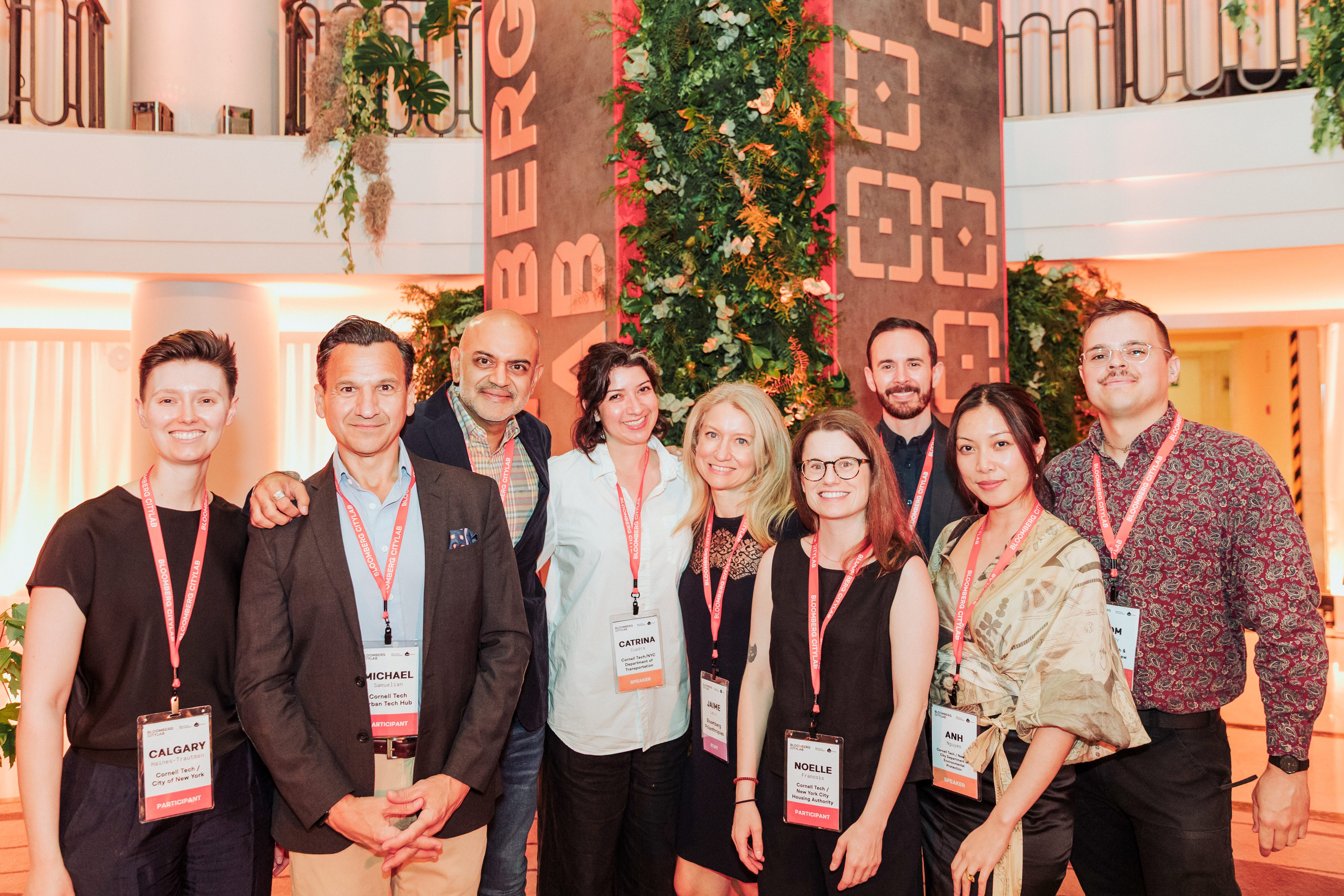
In late April, the Urban Innovation Fellows attended and spoke at Bloomberg CityLab, a global convening built on the premise that the most important innovation is happening at the local level, and results multiply significantly when cities share solutions. Madrid, this year’s host city, welcomed us with beautiful architecture, delicious food, and abundant sunshine, which was greatly appreciated after the New York winter.
We gathered at the Palace Hotel and I was immediately struck by its history and long list of notable guests including Albert Einstein, Ernest Hemingway, and Salvador Dalí. Then the 1,000 attendees started filling in - mayors, government innovators, technologists, designers, artists - it seems the tradition lives on.
Over two days, plenary sessions moved between the hotel and the Teatro Real, where we also watched a performance by Anthony Roth Costanzo of Opera Philadelphia (note: opera is not dead, Timothée). The sessions addressed the topics on everyone’s minds and, much in the way of Cornell Tech’s Urban Systems course, those conversations broke along the lines of key hard and soft systems.
Unsurprisingly, AI and data were at the center of these conversations. Sadiq Khan, Mayor of London, announced the Mayors AI Forum, a Bloomberg-funded initiative bringing together founding cities including London, Bogotá, Tokyo, and San Antonio to shape how AI is developed and deployed. His framing was precise: Be an AI realist. Cities and tech companies need to work together to build solutions that actually serve citizens. UCL’s Institute for Innovation and Public Purpose introduced the Public Sector Capabilities Index, a tool that turns data from more than a dozen city governments into a comparative picture of where cities excel and where gaps quietly compound. It reframes government capability not as a given but as something measurable, investable, and buildable.
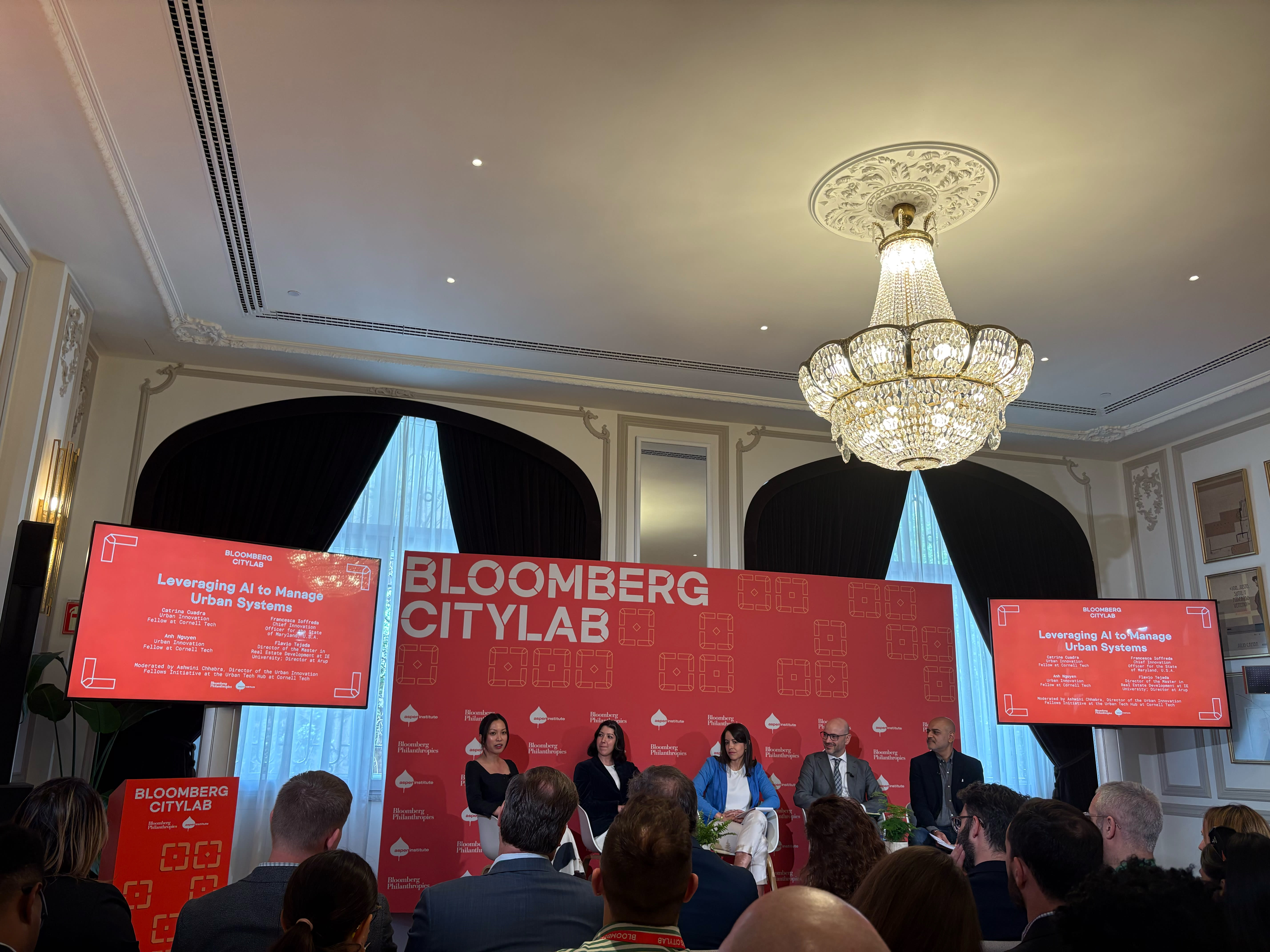
Urban Innovation Fellows participated in a breakout session, Leveraging AI to Manage Urban Systems, moderated by our Director Ashwini Chhabra. The panel, presenting to a completely full room, included Francesca Ioffreda, Chief Innovation Officer for the State of Maryland, Flavio Tejada, Director of the Master in Real Estate Development at IE University and Director at Arup in Madrid, Fellow Catrina Cuadra (NYC Department of Transportation) and myself, Anh Nguyen (NYC Department of Environmental Protection).
Designed as a deliberate complement to the day’s mayoral announcements, the session brought a bottom-up practitioner perspective to the question of what it actually takes to move AI from concept to deployed practice. We discussed the hard work of deploying AI beyond just building the tool. It’s building the institutional trust, data infrastructure, and change management capacity to deploy it in a way that actually sticks.
Climate action was on the minds of cities across the globe in ways big and small. Indy Johar of Dark Matter Labs offered a sobering reframe: on a 3°C warming trajectory, cities aren’t managing incremental risk anymore, they’re managing total value at risk. The infrastructure responses required are no longer single projects but portfolios of interventions, from small scale community programs to ambitious infrastructure investments, that no city balance sheet can carry alone. Nadia Calviño of the European Investment Bank made the case that financing urban mobility, affordable housing, and renewable energy isn’t charity, it’s long-term returns. The EIB directs roughly 25% of its ~€100 billion annual portfolio to cities, with project financing extending up to 30 years specifically because the payoff outlasts any political cycle.
We learned that iconic global destinations as varied as Paris and Bhutan have reframed sustainability, not as an aggravating hurdle or an afterthought, but as a way to make cities more livable and enjoyable for all their residents. Paris’s former mayor Anne Hidalgo reflected on twelve years of reorienting Paris away from cars and toward human life, won through scientific evidence, physician partnerships, and mayoral solidarity networks that gave political cover when the lobbies pushed back. Bjarke Ingels walked through Gelephu Mindfulness City, a 1,000+ km² masterplan for Bhutan shaped by river flows, Buddhist principles, and the conviction that a sustainable city can also be an enjoyable one.
Housing and access to public space are likewise top of mind. The mayors of Barcelona and Baltimore traced different geographies of the same crisis: speculation and redlining as two faces of the same structural failure. Design critic Alexandra Lange made a pointed argument: great playgrounds aren’t a nice-to-have. They are the democracy infrastructure of childhood and cities that design for children’s full development can design better intergenerational public space for everyone.
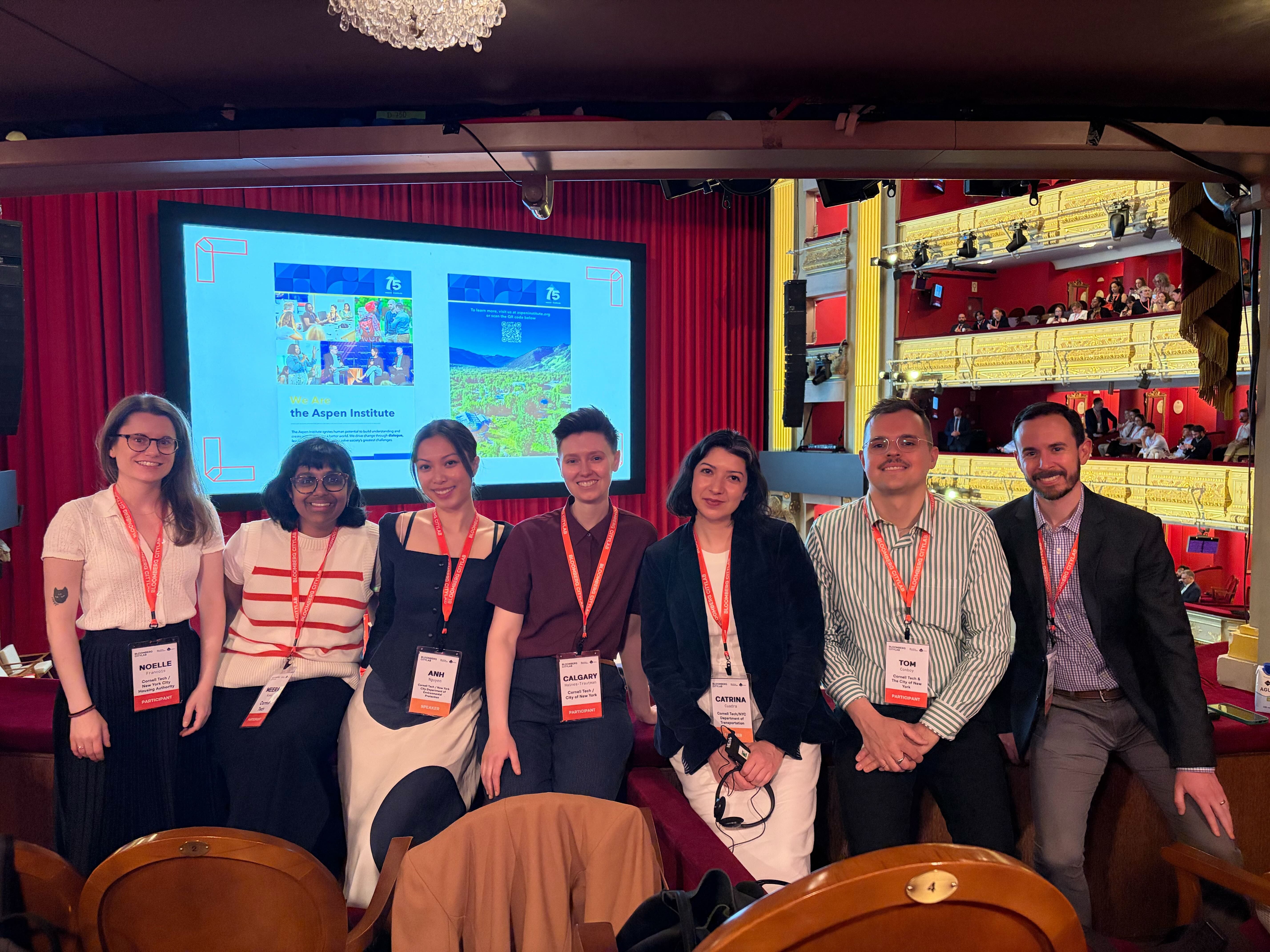
In a Public Square session, Escaping Pilot Purgatory, Fellows Calgary Haines-Trautman (NYC Mayor’s Office of Contracts Services) and Meera Kumar (NYC Economic Development Corporation) hosted discussions on what it actually takes to move from proof-of-concept to institutional change, a question that sits at the heart of the Fellowship’s work and, as it turns out, at the heart of every city’s innovation agenda. Going beyond the what of urban service delivery, Mariana Mazzucato of University College London challenged the room to rethink how cities deliver. She argued that the real unlock is outcomes-oriented governance, citing examples of departments of health, education, finance, and agriculture working across silos during times of crisis. The question is how to make it structural, not situational.
These formal sessions provided frameworks and insights, but some of the most memorable moments came from spontaneous conversations that brought to light the themes running through the conference. At breakfast one morning, several Fellows found ourselves with the Mayor of South Yorkshire, Oliver Coppard, discussing the power of untapped data in city government. On a walking tour through Madrid’s historic center, an unexpected exchange with the former Chief Sustainability Officer of Chicago, Karen Weigert, turned into a longer conversation about the intersection of government, business, and academia in building a sustainable city.
That’s what CityLab does best: it makes the global local and the local legible to the world. The challenges cities face—deploying AI responsibly, escaping pilot purgatory, financing climate adaptation, building equitable public space, developing government capacity—are remarkably consistent across contexts. What varies are the specific solutions, the political constraints, the cultural approaches. By bringing together practitioners working on these challenges in London, Madrid, New York, Baltimore, Bhutan, and beyond, CityLab creates the conditions for honest exchange about what actually works.
I left Madrid with sharper frameworks and new relationships as well as some memorable spontaneous conversations. The answers may be local, but the questions are universal. And when cities share solutions, everyone moves forward.