

Whether you tie it to the publication of the best-selling Abundance, by Ezra Klein and Derek Thompson, or to the rise and ignominious decline of Elon Musk’s DOGE, 2025 was the year everyone started talking about state capacity.
Everyone, including New York’s Mayor, Zohran Mamdani: ”We’ve allowed someone like Elon Musk to make it seem as if the concerns of fraud and efficiency and waste, even quality of life - that these are somehow right wing concerns…. These should be at the heart of any politics for working class people.”
So, it is timely to share a little about one of the Urban Tech Hub’s most recent initiatives – one dedicated to helping build the innovation capacity of city agencies, starting in New York City: the Urban Innovation Fellows program.
While many cities have made meaningful investments in strengthening City Hall-level innovation capacity, there has been significantly less investment in building such capacity throughout the whole of government. As a result, the “innovation signal” weakens the further you travel down the city org chart. As an example, whereas there are 300 employees working in New York City Hall, there are 300,000 City employees working across the 50+ City agencies that deliver services to 8.4 million New Yorkers daily. This, then, is the problem we are tackling.
With the generous support of Bloomberg Philanthropies, in 2025, we launched the Urban Innovation Fellows program with the aim of injecting innovation capacity directly into City agencies, creating a decentralized “innovation mesh network” of sorts to serve as a force multiplier for City Hall efforts.
Over the course of the past year, our seven inaugural Urban Innovation Fellows have been working directly in seven New York City agencies – the Departments of Citywide Administrative Services (DCAS), Environmental Protection (DEP), Sanitation (DSNY) and Transportation (DOT), as well as the NYC Housing Authority (NYCHA), the NYC Economic Development Corporation (EDC), and the Mayor’s Office of Contract Services (MOCS) – on key agency initiatives. They are helping these agencies implement urban technology solutions that advance high priority City goals and to address the policy, procurement, and operational roadblocks that prevent the scaling of successful programs.
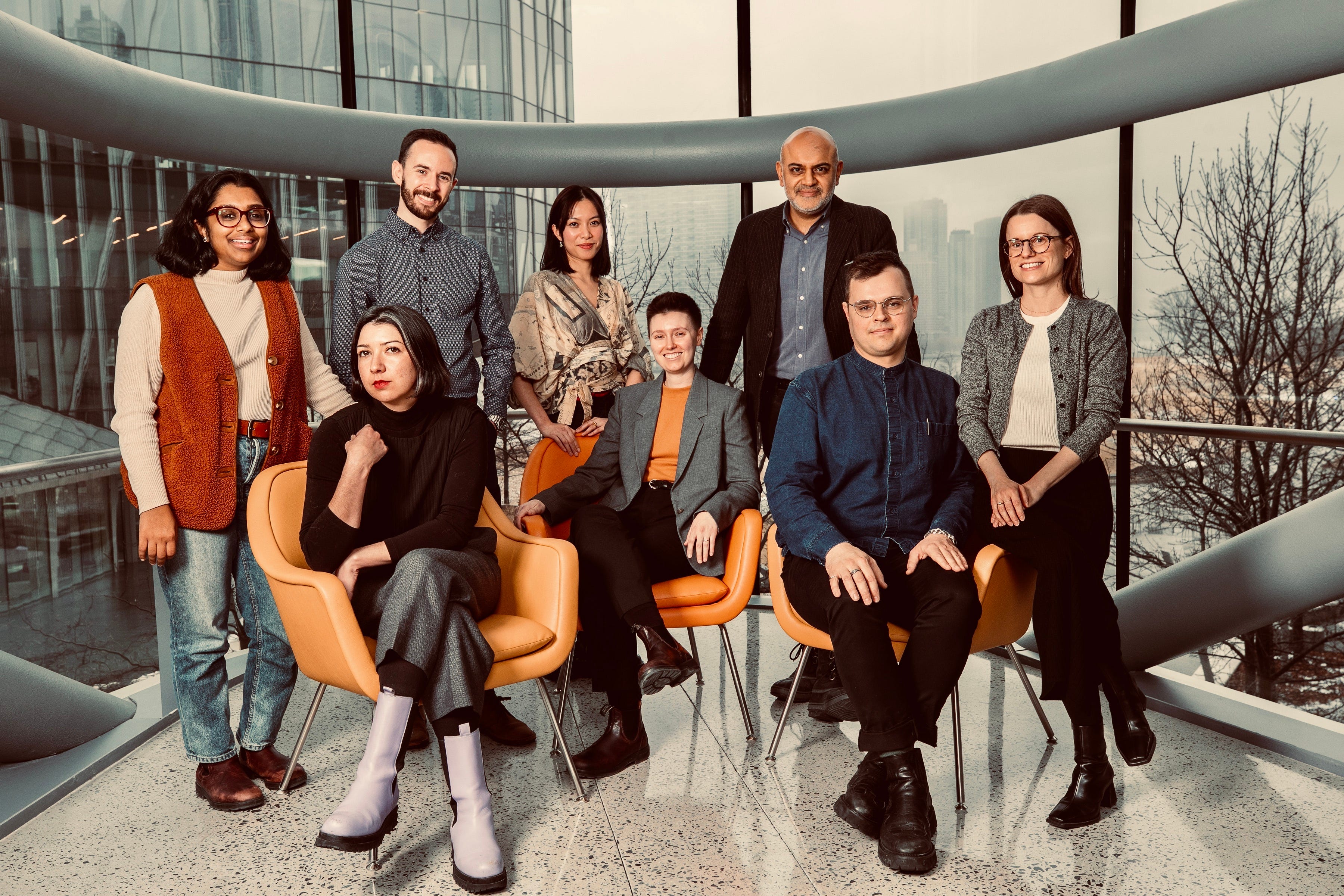
This cohort of Fellows brings diverse expertise spanning the areas of product management, data science, UX design, urban planning, and startup operations. Each Innovation Fellow spends four days a week embedded in their assigned agency and one day on Cornell Tech’s Roosevelt Island campus, creating a unique blend of hands-on implementation and academic collaboration.
The projects they’re tackling span three critical themes:
Leveraging AI and Data: The DSNY, DOT and DEP Fellows are harnessing the potential of AI and machine learning to transform asset management, from computer vision for street condition assessment to predictive models for waste containerization.
Accelerating Systems Decarbonization: The NYCHA and DCAS Fellows are deploying innovative technologies like wastewater heat recovery systems and renewable diesel biofuels – meaningful interim steps that deliver immediate emissions reductions while simultaneously helping cities move towards the complete clean energy transition.
Modernizing Public-Private Collaboration: The MOCS and EDC Fellows are “re-booting” decades-old procurement processes, implementing challenge-based procurement models that allow agencies to work more effectively with tech startups and scale successful pilots.
But the Urban Innovation Fellows program isn’t just about solving NYC’s challenges. It’s about creating a replicable model for agency-level innovation nationwide. By documenting our processes, measuring our impact, and sharing our learnings, we aim to influence how cities everywhere advance technology adoption and expand public-private collaboration.
As cities worldwide grapple with climate change, aging infrastructure, and growing service demands, the Urban Innovation Fellows program offers a compelling blueprint: embed technical expertise where the work happens, foster cross-agency collaboration, and build more sustainable innovation capacity that outlasts any single administration.
Watch this space to meet the Fellows and to learn more about our work. And if you’re also working in the field of civic innovation, I’d love to hear about your experience. Please reach out to me at ashwini@cornell.edu.
The Urban Innovation Fellowship is made possible through the generous support of Bloomberg Philanthropies.